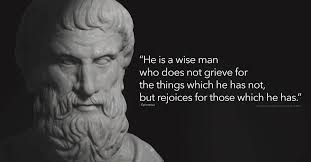
Bio
Epictetus (c. 50–135 CE) was a Greek Stoic philosopher born into slavery in Hierapolis (modern-day Turkey). He was enslaved in Rome, where his master Epaphroditus permitted him to study philosophy under the Stoic teacher Musonius Rufus. After being freed, he established his own school in Nicopolis, Greece, which attracted students from across the Roman world.
His life is the most striking illustration of his own philosophy: born without freedom, physically disabled (his leg was reportedly broken by his master), and yet widely regarded as one of the wisest and most psychologically free people of his era. He wrote nothing himself — his teachings survive through the notes of his student Arrian, who compiled the Discourses and the shorter Enchiridion (Handbook).
Epictetus is the originator of the dichotomy of control, the most foundational concept in Stoicism. He was a major direct influence on Marcus Aurelius, and centuries later on the founders of Cognitive Behavioral Therapy.
Works
Books
- Discourses (compiled by Arrian, c. 108 CE) — four books of his lectures and conversations. Detailed, practical, sometimes blunt. Covers the dichotomy of control, dealing with grief and loss, social relationships, and how to practice philosophy daily.
- Enchiridion (Handbook) — a condensed summary of his key teachings. Often the best starting point. Opens with the famous distinction between what is and isn’t “up to us.”
Films & TV
Music
Other
Notes
- The opening of the Enchiridion: “Some things are in our control and others not.” Everything in Stoicism flows from this premise.
- Albert Ellis, founder of REBT (forerunner of CBT), explicitly cited Epictetus as the primary philosophical foundation for his therapy.
- His background as a slave is not incidental — his philosophy of inner freedom was forged in conditions of literal external bondage. This gives his ideas a credibility that aristocratic Stoics like Seneca sometimes lack.
- Influential on Viktor Frankl, James Stockdale (US POW who credited Epictetus with his survival in a Vietnamese prison camp), and the modern Stoicism revival.