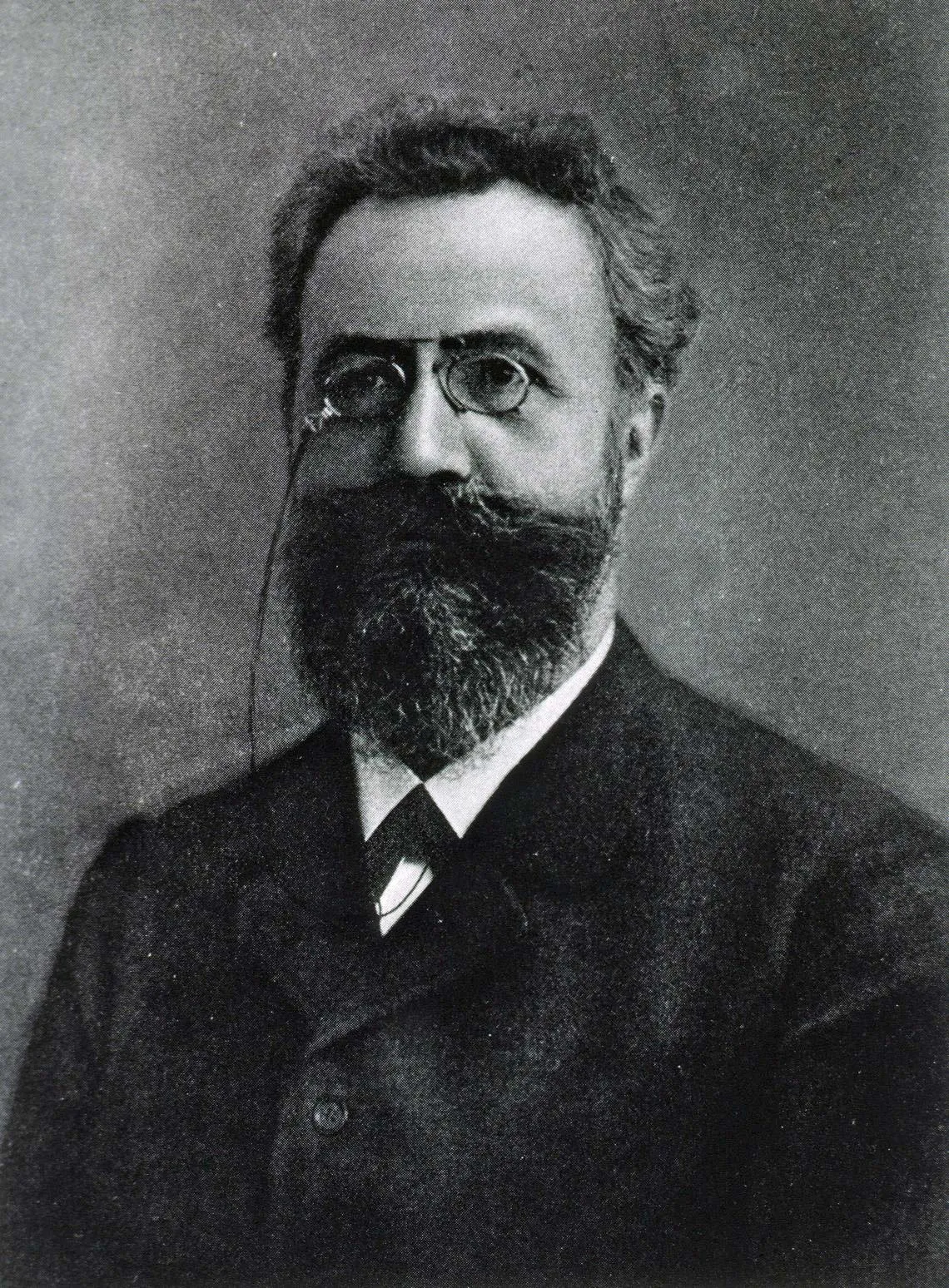
Bio
Hermann Ebbinghaus (1850–1909) was a German psychologist and pioneer of experimental memory research. Working largely alone and using himself as his only experimental subject, he was the first to apply scientific methods to the study of memory — measuring how quickly information is forgotten and how repetition affects retention. His two landmark contributions, the forgetting curve and the spacing effect, remain foundational to cognitive psychology and are directly behind modern tools like Anki and spaced repetition systems. He also developed the completion test, an early precursor to modern intelligence testing. His 1885 monograph Über das Gedächtnis (“On Memory”) established memory as a measurable phenomenon.
Works
Books
- Über das Gedächtnis (1885) — “On Memory”: the foundational monograph documenting the forgetting curve and spacing effect
- Grundzüge der Psychologie (1902) — “Principles of Psychology”: broader psychology textbook
Other
- The Forgetting Curve — mathematical description of how memory decays exponentially over time without review → Ebbinghaus Forgetting Curve
- The Spacing Effect — distributed practice across intervals dramatically outperforms massed practice (cramming) → Spaced Repetition
- Nonsense syllables — invented as a controlled stimulus for memory experiments, eliminating the confound of prior meaning
Notes
Ebbinghaus conducted his experiments decades before neuroscience could explain why his findings were true. The mechanisms (synaptic consolidation, reconsolidation during retrieval) were only understood in the 20th century — but his empirical results held up entirely. A rare case of behavioral science arriving at correct conclusions before the underlying biology was known.