Transclude of gettyimages-852354984-1619189252.avif
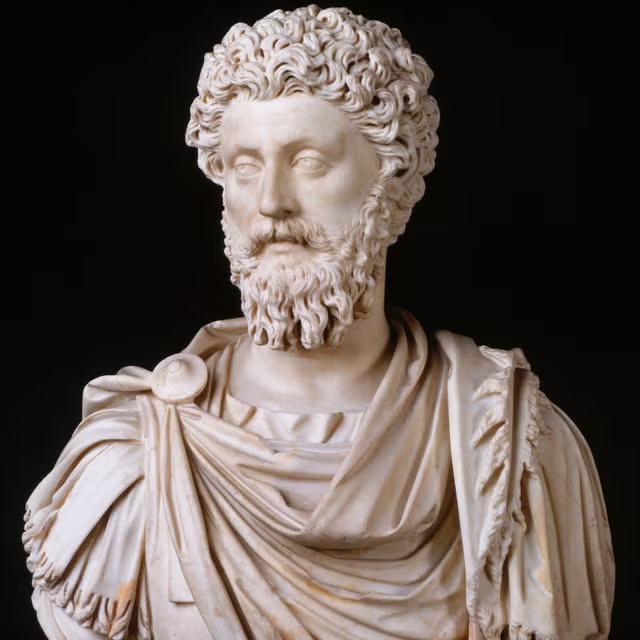
Bio
Marcus Aurelius (121–180 CE) was Roman Emperor from 161 to 180 CE and one of the most important Stoic philosophers. Born into Roman aristocracy, he was adopted by Emperor Antoninus Pius and groomed for rule. His reign was marked by military campaigns against Germanic tribes and the Parthian Empire, plague, and internal unrest — yet he is remembered more for his philosophy than his politics.
He studied Stoic philosophy under Junius Rusticus, who introduced him to the works of Epictetus. Unlike most Stoic writers, Marcus wrote not for publication but for himself — private notes to keep himself honest, focused, and grounded during the pressures of empire. These notes survived as Meditations, one of the most intimate philosophical documents in history.
He is widely regarded as one of the “Five Good Emperors” — a period of stability and wise governance in Roman history.
Works
Books
- Meditations (c. 161–180 CE) — private philosophical journal, written in Greek. Twelve books of self-exhortation, reminders, and Stoic reflections. Never intended for publication. Organized around themes: the dichotomy of control, impermanence, rationality, duty, death, and the view from above.
Films & TV
Music
Other
Notes
- His opening lines in Meditations are a list of what he learned from each person in his life — a practice of gratitude and self-awareness.
- Frequently returns to memento mori — contemplating his own death as a tool for perspective.
- Coined (or popularized) the “view from above” — mentally zooming out to see one’s problems in cosmic scale.
- Ruled an empire while writing privately that power and fame are worthless. The gap between his role and his philosophy is part of what makes him compelling.