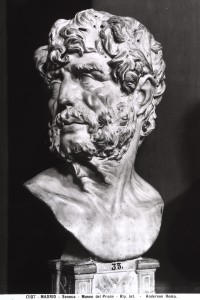
Bio
Lucius Annaeus Seneca (c. 4 BCE–65 CE), known as Seneca the Younger, was a Roman Stoic philosopher, statesman, dramatist, and advisor to Emperor Nero. Born in Córdoba (modern Spain) to a wealthy family, he pursued a career in Roman politics while writing prolifically on philosophy, ethics, and natural science.
His life was marked by dramatic reversals: exiled to Corsica by Emperor Claudius for eight years, recalled to serve as Nero’s tutor and chief advisor, and ultimately forced to commit suicide by Nero after being implicated in a conspiracy. His death — which he faced with deliberate Stoic calm — became one of the most famous scenes in Roman history.
Seneca is the most literary of the major Stoics. His Letters from a Stoic (Epistulae Morales) are among the finest personal essays in Latin literature — conversational, self-critical, and direct. He is also the source of the famous observation that “it is not that we have a short time to live, but that we waste a great deal of it.”
Works
Books
- Letters from a Stoic (Epistulae Morales ad Lucilium) — 124 letters to his friend Lucilius on how to live. Wide-ranging, intimate, and practically focused. Best starting point for Seneca.
- On the Shortness of Life (De Brevitate Vitae) — a short essay on time, attention, and how most people trade their lives for things that don’t matter. Highly relevant to modern distraction culture.
- On Anger (De Ira) — three books on the nature of anger and how to manage it.
- On Tranquility of Mind (De Tranquillitate Animi) — practical discussion of achieving mental stability.
Films & TV
Music
Other
Notes
- Often criticized for the gap between his Stoic preachings and his considerable personal wealth — he acknowledged this tension openly and argued that practicing philosophy while navigating the world was itself the point.
- His prose is the most accessible of the ancient Stoics for modern readers.
- On the Shortness of Life is probably the best single entry point into Stoic thought for someone starting out.
- Died by suicide at Nero’s order, opening his veins. Contemporary accounts describe him dictating philosophical thoughts to scribes until the end.