Explanation
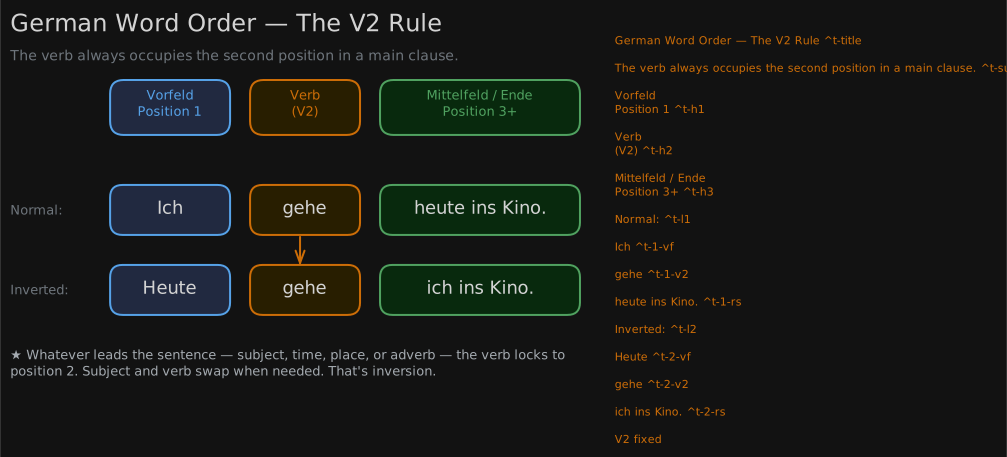
German word order is governed by the V2 rule: the conjugated verb must always be in second position in a main clause. The first position can be occupied by the subject, a time expression, or another element — but when anything other than the subject comes first, the subject shifts after the verb.
Rules
1. Standard (Subject-Verb-Object):
Ich esse heute einen Apfel. Subject → Verb → Time → Object
2. V2 rule — verb stays in position 2:
Heute esse ich einen Apfel. — Today I eat an apple. Time → Verb → Subject → Object
3. Yes/No questions — verb first:
Isst du einen Apfel? — Are you eating an apple?
4. W-questions — W-word first, then verb:
Was isst du? — What are you eating? Wann kommst du? — When are you coming?
5. Time-Manner-Place (TMP) order for adverbials:
Ich fahre morgen (time) mit dem Bus (manner) nach Berlin (place).
6. Infinitives and past participles go to the end:
Ich kann Deutsch sprechen. (modal + infinitive) Ich habe einen Apfel gegessen. (haben + past participle)
Examples
- Ich lerne Deutsch. — Standard SVO
- Morgen lerne ich Deutsch. — Time-fronted, verb stays 2nd
- Lernst du Deutsch? — Yes/No question
- Warum lernst du Deutsch? — W-question
- Ich kann kein Deutsch sprechen. — Modal sends infinitive to end
Related Vocabulary
- Essen — Was isst du? / Heute esse ich Suppe.
Exceptions
In subordinate clauses (after weil, dass, wenn, ob, etc.), the conjugated verb goes to the very end:
Ich lerne Deutsch, weil ich nach Deutschland fahren will. I’m learning German because I want to go to Germany.
Notes
The V2 rule trips up English speakers most when a time/place expression starts the sentence. When in doubt: count to second position and put the verb there. See Modal Verbs for how modals interact with word order.
Resources
- Still stuck on German Word Order Watch This — Speak Fluent German · beginner-friendly breakdown of the V2 rule and sentence structure
- Stop Confusing seit seit & seitdem - German A2 & B1 — YourGermanTeacher · seit as conjunction sends verb to end of clause